|
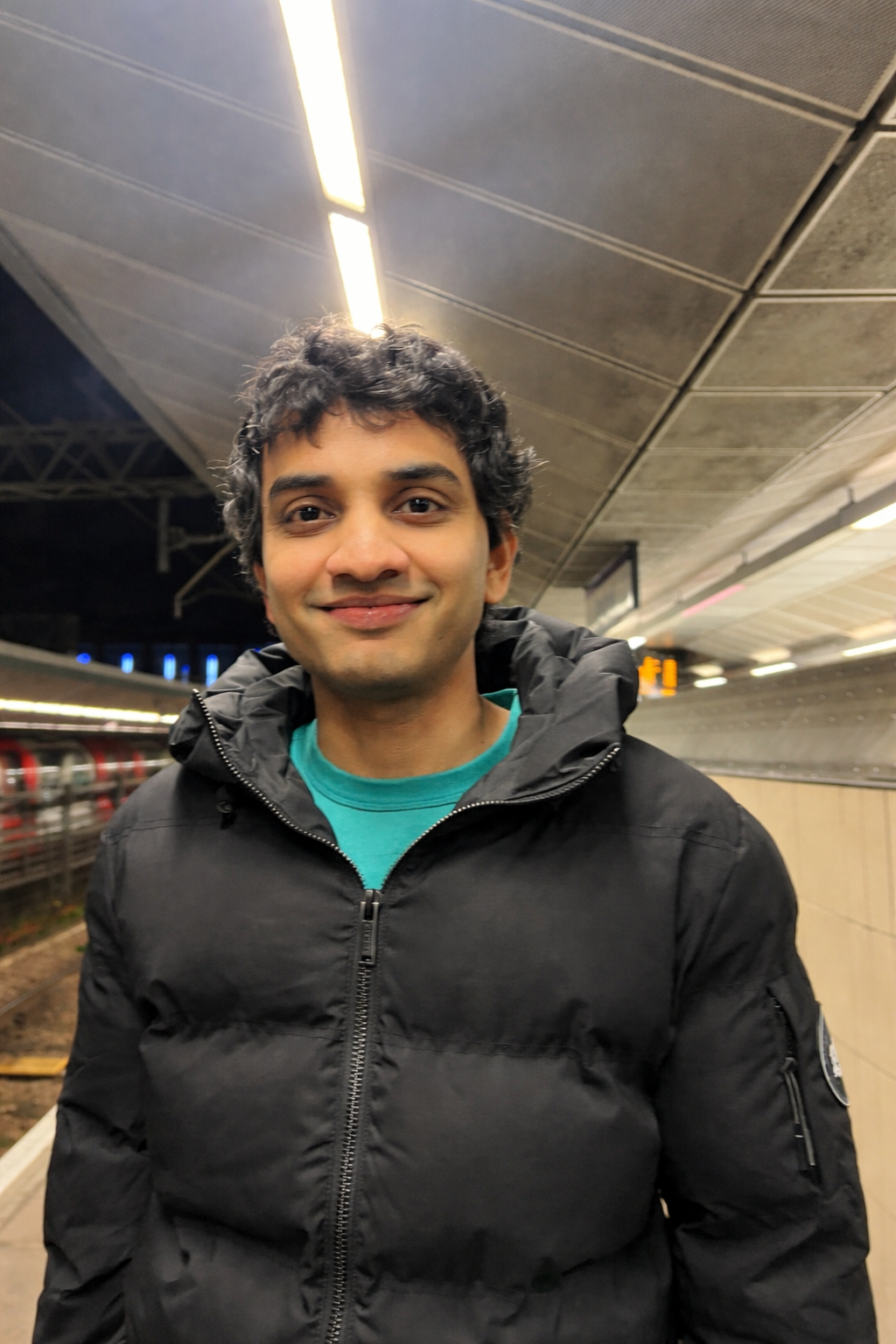
Aditya Marada I am an MSc Computer Science student at the University of Amsterdam, where my thesis work focuses on large-scale learning-to-rank systems at Qogita. I have research experience spanning large language models, representation learning, information retrieval, multi-agent systems, and multilingual knowledge graphs. Previously, I was as a senior software engineer at Lendingkart in Bangalore, designing distributed backend systems at scale across a platform with 150+ microservices. In 2025 I was a Google Summer of Code contributor at the DBpedia Association, building multilingual knowledge-extraction pipelines for Hindi Wikipedia. |
|
ResearchMy research interests include large language models, world models, multi-agent systems, and information retrieval. I am particularly fascinated by problems at the intersection of scalable systems and principled machine learning. |
|
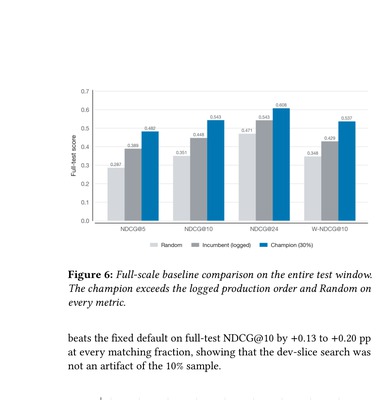
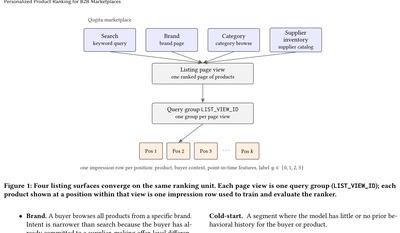
Smart Rankings: Learning-to-Rank at Scale
Aditya Marada Master's Thesis, University of Amsterdam & Qogita — Jul. 2026 report End-to-end LambdaMART pipeline over 52M+ product impressions, 163k buyers, and 450k products. Engineered 72 point-in-time ranking features spanning behavioural history, semantic embeddings, and session context. Improved production NDCG@10 by 9.55 percentage points. |
|
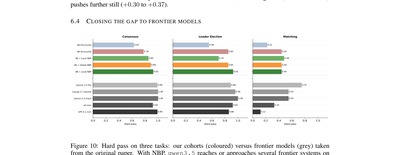
Coordination Without Commitment: Multi-Agent LLM Coordination
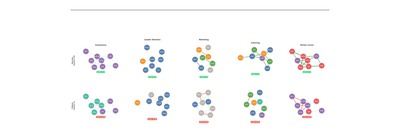
Aditya Marada Research Project, University of Amsterdam — May 2026 report Investigated coordination failures of decentralised LLM agents on distributed computing tasks (consensus, graph colouring, leader election). Designed the Neighbour Belief Protocol (NBP), which substantially narrows the performance gap between smaller open-weight models and frontier models on perception-limited tasks. |
|
Reward-Aware World Models Using Joint-Embedding Predictive Architectures (JEPA)
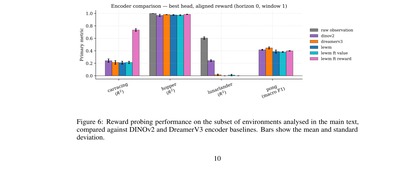
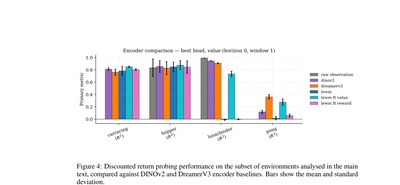
Aditya Marada Research Project, University of Amsterdam — Jun. 2026 report Investigated whether JEPA latent representations encode recoverable reward and value information for downstream RL. Key finding: reward supervision is broadly compatible with the JEPA objective — jointly optimising reward/value, latent-prediction, and SIGReg losses stabilises fine-tuning across all 8 environments without representation collapse. Compared against DreamerV3 and DINOv2 baselines. |
|
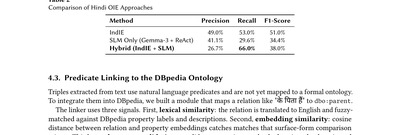
LLM-Assisted Multilingual Information Extraction for Knowledge Graph Population: The DBpedia Hindi Chapter
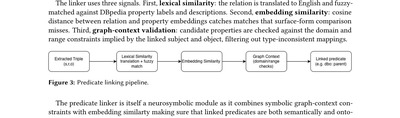
Aditya Marada ESWC 2026 Text2KG Workshop — Sep. 2025 paper Hybrid multilingual IE system combining rule-based NLP with small LMs, achieving 66% recall on Hindi-BenchIE. Built a complete knowledge-graph population pipeline: entity linking, ontology alignment, and SPARQL endpoint deployment. Google Summer of Code 2025 project. |
|
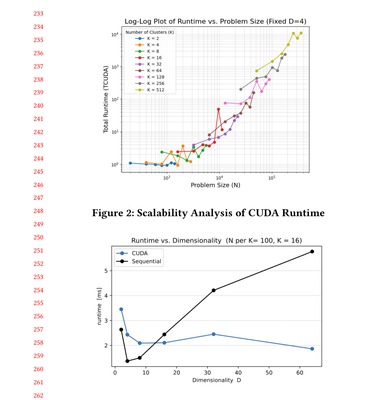
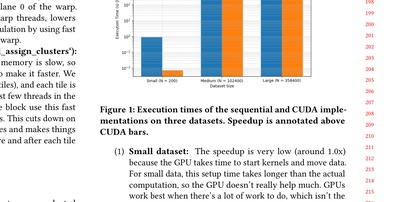
Parallel K-Means Clustering Using CUDA
Aditya Marada Programming Large-Scale Parallel Systems, University of Amsterdam — Jun. 2025 report GPU-accelerated K-Means in C++/CUDA achieving a 47.6× speedup over the sequential CPU baseline. Scalability experiments on the DAS-5 supercomputer across varying dataset sizes, dimensionalities, and cluster counts. |
Publications |
|
LLM-Assisted Multilingual Information Extraction for Knowledge Graph Population: The DBpedia Hindi Chapter
A Framework to Capture the Shift in Dynamics of a Multi-phase Protest |
Projects |
|
Cost-Aware Scheduling in OpenDC (2024)
URL Shortener (2025)
Social Network Graph from Text (2020) |
|
Template from Jon Barron. |